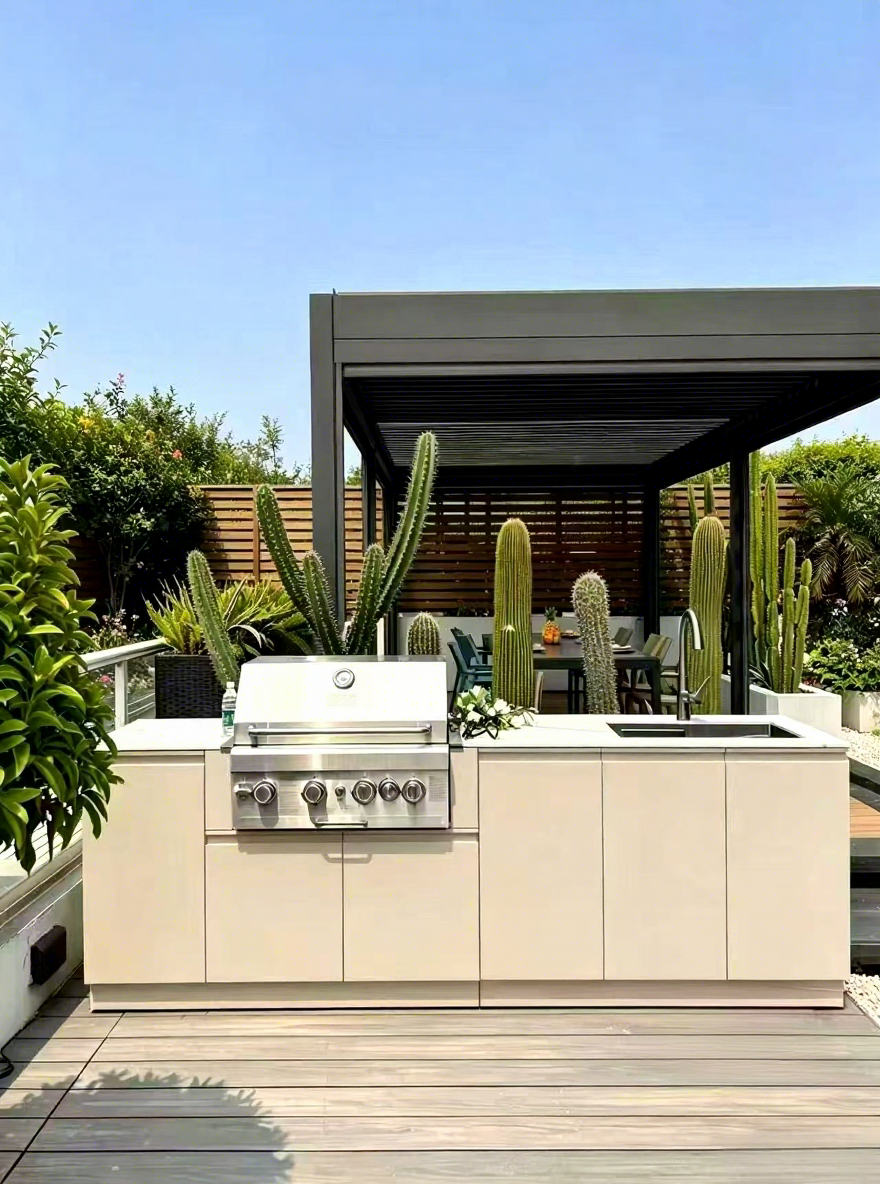
Key Specifications to Consider for Outdoor Kitchen Designs
When designing an outdoor kitchen, several specifications are critical to ensuring functionality and durability.
Materials: The choice of materials significantly impacts the kitchen's longevity and maintenance. Stainless steel is often preferred for appliances due to its resistance to rust and corrosion, while stone or brick can provide a sturdy and stylish surface for countertops. Consider using WPC (Wood Plastic Composite) for decking or cabinetry, as it offers weather resistance and low maintenance. You might also explore a Modular Outdoor Kitchen System for flexible options in your design.
Dimensions: The layout should accommodate both functionality and aesthetics. Standard countertop heights are around 36 inches, but you may need to adjust based on specific user needs or appliances. Ensure that there is sufficient space between the grill, prep areas, and dining zones to facilitate movement and safety.
Appliance Specifications: Each appliance should be rated for outdoor use, with proper insulation and protection against the elements. Confirm the power requirements, fuel types (gas, propane, electric), and ensure compliance with local regulations for outdoor installations.
Ventilation Requirements: Proper ventilation is essential, especially for gas grills. Install hoods or vents to ensure smoke and heat are effectively managed, enhancing safety and comfort.
Utility Connections: Plan for water, gas, and electricity connections. This includes drainage for sinks and dishwashers, as well as electrical outlets for appliances. Ensure that all connections meet local codes and standards.
By addressing these specifications early in the design process, buyers can avoid costly changes and ensure a functional outdoor kitchen that meets user expectations.
 EN
EN